



Special Collections:
Forests and Oceans


Brown pelicans, once decimated by the feather trade and toxic pesticides, made a remarkable recovery. Following the U.S. ban of DDT and habitat protections under the ESA, their populations rebounded, leading to their full removal from the endangered species list by 2009.
Leading up to Endangered Species Day on May 15, we're highlighting marine animals protected by the U.S. Endangered Species Act. Join us in defending this landmark law and species like these: https://oceana.ly/ESA

Indonesia hosts our first river Interceptor, Interceptor 001, in Jakarta’s Cengkareng Drain, alongside Interceptor 020 in the nearby Cisadane River.
Lessons learned from these deployments are now shaping future in-country and global efforts.

Indonesia is a key focus of our 30 Cities Program, with planned deployments in Jakarta, Denpasar (Bali), and Tasikmalaya (West Java). The country already hosts our first river Interceptor, 001, in Jakarta’s Cengkareng Drain, and Interceptor 020 in the Cisadane River. Since deploying Interceptor 001 in 2019, we've partnered with local authorities and communities, adapting solutions to scale operations. Interceptor 020 exemplifies this adaptive approach, providing crucial insights for future efforts in Indonesia and worldwide.
Stay updated by subscribing to our YouTube channel. Learn more and support us at The Ocean Cleanup. Follow us on Facebook, Instagram, TikTok, and X.
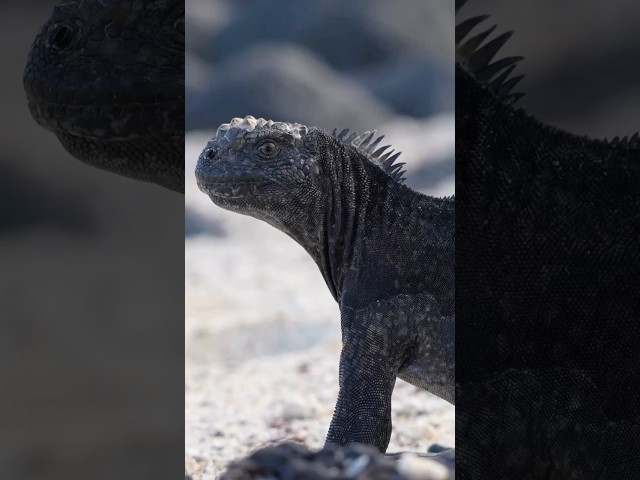
The marine iguana is the world's only lizard that forages in the ocean, a remarkable adaptation making it a truly unique reptile.
Explore more about marine iguanas in our Marine Life Encyclopedia.

Interceptor deployments are planned for the Philippines as part of our 30 Cities Program.
The first Interceptor will be deployed in the Meycauayan River in the coming months. This aims to prevent trash from the Manila Bay Region from flowing into the ocean.

On Daram Island, Philippines, illegal fishing has severely depleted local fisheries, causing malnutrition. A group of women are now bravely confronting these practices at sea to protect their community and livelihoods. This is their inspiring story.
Learn more about Oceana's vital work in the Philippines: https://ph.oceana.org/. Get involved by subscribing for updates: https://oceana.ly/subscribe, or become a Wavemaker to support ocean conservation: https://oceana.ly/4rGhn8Z.
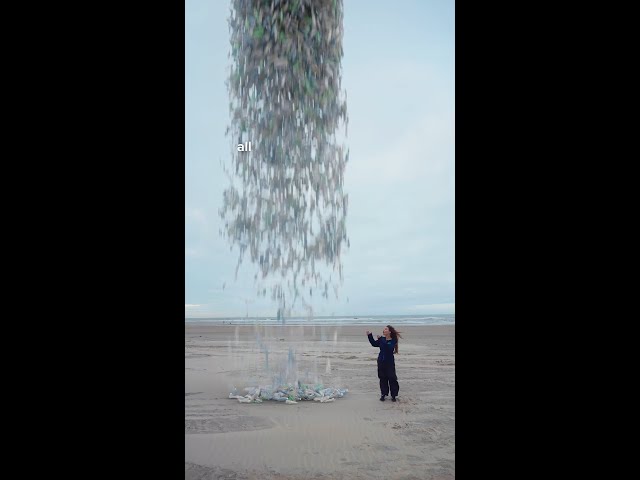
This year, your monthly donation has approximately 2.5x the impact. Thanks to more Interceptors and efficient operations, we now collect significantly more trash for every dollar.
As our impact grows, so does yours. Take action today: https://visit.theoceancleanup.com/4twyITw. Note: No AI was used in the video; bottles are 3D animated for illustration.

Sea otters are remarkable for their use of rocks as tools to crack open shells.
Explore more about these fascinating marine mammals in our Marine Life Encyclopedia: oceana.ly/seaotter

Our blue planet's oceans cover over two-thirds of its surface, connecting us all. Yet, these vital waters are increasingly under threat.
Oceana works to protect marine life, coastal communities, and our climate. This critical mission requires collective effort, as we cannot succeed alone.

Solo sailor Ellen MacArthur's circumnavigation of the globe provided profound insights into the world's finite resources and interconnected cycles. Her journey highlighted how today's decisions directly impact future availability.
Based on this understanding, MacArthur proposes a bold new vision for economic systems. She advocates for a circular economy, moving away from linear models, where resources are continuously reused and regenerated, ensuring sustainability for generations to come.
Help our mission reach like-minded people.
Share this video.

Inspired by a picture book, Max Romey journeyed to a remote Alaskan beach for marine debris, discovering a more complex story. Five years prior, an ocean plastics cleanup on Kayak Island left him overwhelmed. While the issue remains intricate, sharing the "big picture" now helps him envision collaborative solutions.
Learn more through Max's videos: No Lost Shoe, Give A Beach A Bottle, and Trailbound Alaska.

UNEP has partnered with syndicated cartoonist Jim Toomey for a video series addressing ocean litter.
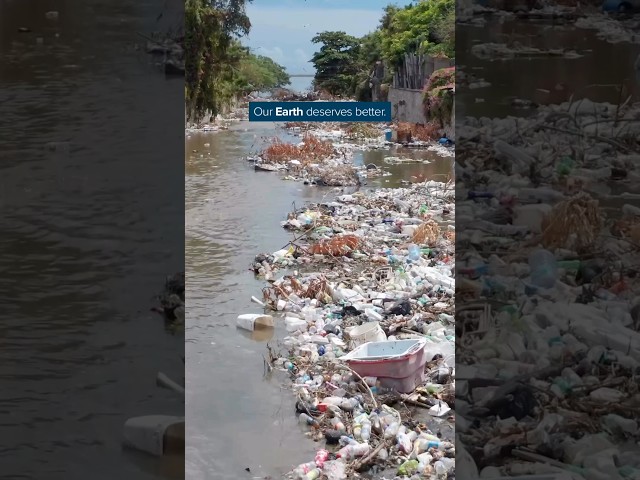
Trash, even from upstream, travels hundreds of miles to remote oceans, causing billions in damage and threatening marine life and human health.
The "Two Minutes on Oceans with Jim Toomey" series uses animation and humor to simplify complex scientific issues for the public. View additional videos at: www.rona.unep.org/toomey
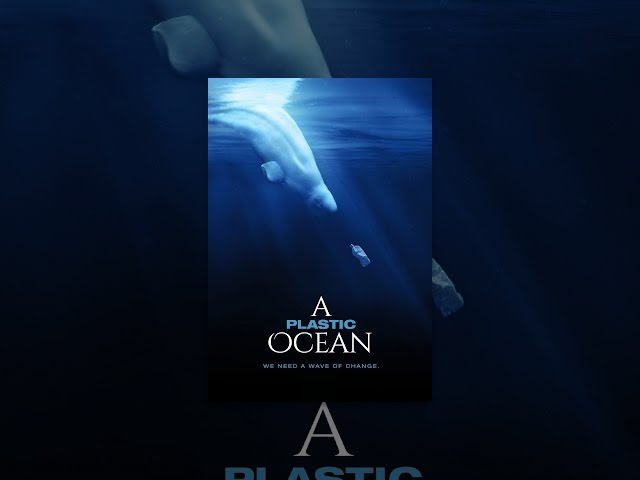
Join a filmmaker and a world record free-diver on an epic global adventure.
They travel the earth, uncovering the shocking impact of plastic pollution on our oceans and marine life.

"Plastic Pollution, Our Oceans, Our Future," a short film by Christopher Hanson (USA), secured 3rd Prize in the 2016 Film4Climate Global Video Competition, presented by Connect4Climate and partners.
This film features 17 Hawaiian students examining plastic pollution's impact on their beaches and envisioning a sustainable future for the oceans, as Hawaii considers banning single-use polystyrene.
For more information, visit the official Film4Climate website, see all winners, or read the World Bank press release.

Today marks 16 years since the Deepwater Horizon blowout, the worst oil spill in U.S. history. This disaster, like others, underscores a critical truth: where there's drilling, there's spilling.
Such incidents devastate our oceans, marine life, and coastal communities. We are highlighting five of the worst U.S. oil spills to emphasize this risk. Join us in opposing the U.S. government’s proposed expansion of offshore drilling: Protect Our Coasts.

To date, we have successfully intercepted over 12,000 kg of trash.
We are continuously working on efficiency improvements to enhance these efforts.

Whale sharks are the largest fish in the ocean, capable of reaching lengths of nearly 65 feet.
Explore more about these impressive creatures in our Marine Life Encyclopedia.

The Ocean Cleanup's Research team has reached a significant milestone, releasing 100 peer-reviewed scientific publications. Science is central to understanding ocean plastic pollution—its scale, sources, and behavior. This research has informed cleanup strategies, from mapping the Great Pacific Garbage Patch to identifying polluting rivers and understanding industrial fishing, helping trace pollution origins and guiding effective interventions.
As global cleanup efforts scale, our focus will shift from diagnosing the problem to measuring and demonstrating our impact. Committed to open science, all publications are publicly accessible on our website. Learn more about this achievement from Head of Research, Laurent Lebreton: https://visit.theoceancleanup.com/4mDjLML
Environmental Scientist and Advocate

