




Special Collections:
Oceans
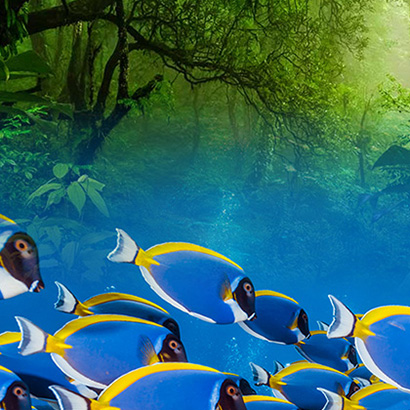

Giant manta rays are the largest rays in the world, with wingspans reaching up to 26 feet and weights exceeding 5,000 pounds.
Discover more about these fascinating creatures in our Marine Life Encyclopedia.

Pacific sardines are vital for the survival of whales, seabirds, sea lions, and large fish along the U.S. West Coast. As a key species in the ocean food web, their decline significantly affects marine ecosystems.
Unfortunately, their population has plummeted by 97% over the past 20 years due to overfishing and changing ocean conditions. Despite this, the Trump administration is advocating for increased fishing of this vulnerable species. Join us in defending these essential fish and the wildlife that depends on them: https://oceana.ly/47o2nET

September brought significant advancements in ocean conservation, highlighting new discoveries and impactful legislation for marine life.
Stay updated on these inspiring stories that are making a difference for our oceans.

North Atlantic right whales are critically endangered, with only about 380 individuals left. Some members of Congress are attempting to delay essential protections for this species.
These whales urgently need our help. Join us in urging the U.S. Senate to reject this bill and ensure the protections they deserve: oceana.ly/4dGCTpO

Rizky Oktaviana was lured by the promise of a good job on an industrial fishing vessel, but his experience turned into a nightmare. For 18 months, he faced perilous conditions, witnessed harmful fishing practices, and was trapped at sea without compensation.
Now a human rights advocate in Indonesia, Rizky fights for the rights of fishers, ensuring their voices are heard. Discover his full story and the human cost of seafood by watching here: https://youtu.be/2fit5OPywwg.

🦈 Healthy oceans depend on sharks. These vital predators maintain balance in ocean ecosystems by regulating prey populations and preying on old and sick fish, which promotes overall fish health.
Protecting these iconic ocean animals is crucial now more than ever.

Ocean acidification is weakening sharks' teeth, posing significant risks to marine ecosystems.
This change highlights the broader impact of climate change on ocean life.

Rizky Oktaviana endured 18 months of unpaid labor as a fisher on a trawling vessel, witnessing illegal fishing practices and harsh conditions. Now, he advocates for the rights of migrant fishers, highlighting that at least 128,000 fishers are currently trapped in forced labor at sea. Illegal, unreported, and unregulated (IUU) fishing not only exploits workers but also threatens marine ecosystems and global food security, costing between $26 to $50 billion annually.
To combat these abuses, coordinated action is essential, including stronger protections from policymakers and transparency in seafood supply chains. Learn more about fishers' journeys from exploitation to advocacy and how we can work together for a better future for fishers and our oceans: Fishers Speak Out.

Giant Pacific octopuses are known for their intelligence, capable of remembering landmarks, navigating their environment, and using tools.
Discover more about these fascinating cephalopods in our Marine Life Encyclopedia.

Microplastics are pervasive, contaminating our environment, bodies, and food globally. Awareness of this issue has surged in recent years, prompting the need for action.
Discover more about microplastics and Oceana's initiatives to combat the plastic crisis at Oceana. Stay updated by subscribing to Oceana's channel at this link, or become a Wavemaker to support ocean conservation at this link. Follow Oceana on Facebook, Instagram, X, and TikTok.
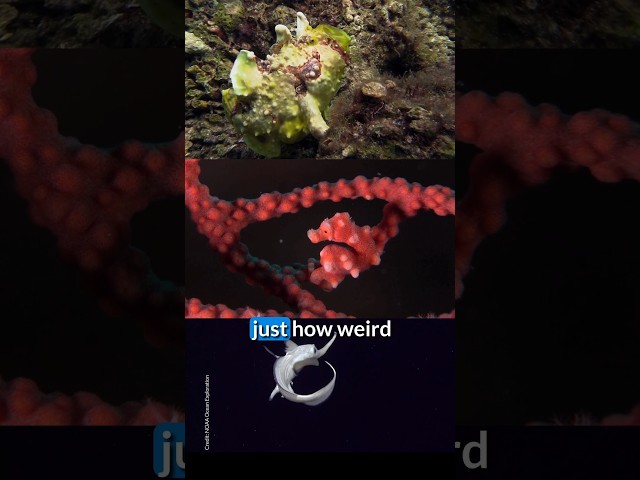
Ocean evolution has produced fish in a variety of shapes and sizes. Some fish use their pectoral fins to "walk," while others, like ghost sharks, thrive in the dark depths of the ocean.
These unique adaptations make these ocean animals well suited for life beneath the waves.

In 2022, Oceana researchers spent eight days exploring 23 sites around Kodiak Island to study deep-sea corals and seafloor habitats. The expedition revealed a vibrant ocean ecosystem from the surface to the seafloor.
The goal was to enhance understanding of the Gulf of Alaska's seafloor to aid Oceana's campaign against destructive bottom trawling.
🌊 Get Involved 🌊
Subscribe to Oceana: https://oceana.ly/subscribe
Become a Wavemaker: https://oceana.ly/4rGhn8Z
Follow us on Facebook, Instagram, X, and TikTok.

The deep sea urgently needs protection as corporations rush to mine minerals in fragile habitats, risking the destruction of ecosystems we barely understand. In this video, Oceana Senior Advisor Alexandra Cousteau highlights the detrimental effects of deep-sea mining on marine life.
We must prevent the exploitation of this unique ecosystem. Join us in urging lawmakers to halt the fast-tracking of deep-sea mining: https://oceana.ly/4cm1NdO. Stay updated by subscribing to Oceana: https://oceana.ly/subscribe and become a Wavemaker: https://oceana.ly/4rGhn8Z. Follow Oceana on Facebook, Instagram, X, and TikTok.

August brought significant positive developments for our oceans. Federal lawmakers took a stand against the Trump administration to protect endangered species.
Additionally, a brutal annual seabird hunt was canceled for the first time in over 400 years, marking a notable victory for marine conservation.

Cardinalfish fathers exhibit a unique parenting behavior by carrying their eggs in their mouths for protection.
Learn more about these fascinating creatures and their role in marine life.
Plastic pollution threatens the pristine natural beauty and biodiversity of U.S. national parks, from Glacier Bay's icebergs to Dry Tortugas' coral reefs.
This National Parks Week, join the effort to protect these vital habitats from plastic waste. Learn more at Oceana.

In the past year, scientists have uncovered some extraordinary species, including hairy fish and carnivorous "death-ball" sponges.
These discoveries highlight the incredible diversity of ocean wildlife and the ongoing importance of STEM research in understanding our planet's ecosystems.

The ocean sunfish is among the heaviest bony fish, reaching weights of up to 4,900 pounds.
Discover more about sunfish in our Marine Life Encyclopedia.

Dugongs and manatees are often confused, but they are distinct relatives. A simple way to differentiate them is by their tails: dugongs have fluke-shaped tails, while manatees have paddle-shaped tails.
To learn more about dugongs, visit our Marine Life Encyclopedia: https://oceana.ly/4zjglF2.

The ocean is teeming with incredible creatures that seem almost unbelievable! Discover some wild ocean animals that boast astonishing features.
Join us as we explore the fascinating world of marine life and its weird inhabitants.
Environmental Scientist and Advocate
What EarthSayers stands for
Discover Diverse Voices on EarthSayers
Unlike algorithm-driven platforms that push you into a content bubble, we ensure you hear a variety of perspectives from scientists, activists, Indigenous leaders, business innovators, and everyday citizens working toward sustainability.
EarthSayers CINEMA
Watch, learn and lead—sustainability starts with you.
How to Live on Earth | Feature Documentary | Presented by Benedict Cumberbatch
What if the solutions to building a better future already exist? How to Live on Earth is an ambitious documentary that explores how humanity can create a thriving future by collaborating with nature. Presented by Benedict Cumberbatch, the film reveals the potential of teaming up with nature to address our greatest challenges.
Heartwarming and energizing, it offers a hopeful vision for a future where both nature and humanity can thrive. How to Live on Earth is produced by Open Planet Studios in association with Villars Institute Foundation and Silvania. Join the conversation by downloading film assets and sharing your reaction at howtoliveonearth.net/social-toolkit. Explore educational resources from the Villars Institute at YouTube.


