




Special Collections:
Oceans
Global sea levels are rising. NASA's Tom Wagner leads research, with scientists studying the Greenland Ice Sheet to understand this phenomenon. Explore NASA's sea level rise research here.
Thomas P. Wagner, NASA's Program Scientist for the Cryosphere, directs studies of Earth's polar regions, glaciers, sea ice, and their connection to climate change and sea level rise. Learn more about him here.

A new NASA study reveals significant global declines in microscopic ocean plant-life, or phytoplankton, which form the base of the marine food chain. This research is the first to analyze long-term phytoplankton community trends using NASA satellite data.
Diatoms, the largest type of phytoplankton, decreased over 1% annually from 1998 to 2012, particularly in the North Pacific, North Indian, and Equatorial Indian oceans. This reduction could impact the amount of atmospheric carbon dioxide absorbed and stored in the deep ocean. Dr. Cecile Rousseaux is featured.
This public domain video is available for download at http://svs.gsfc.nasa.gov/goto?12009.

Beyond terrestrial climate change, oceans face significant threats. They absorb a quarter of all greenhouse gases, fundamentally altering their chemistry. This causes severe problems for marine ecosystems.
Such changes ultimately jeopardize the billions who depend on oceans for food and livelihood, diminishing their vital beauty. This information was published on March 23, 2015, by Grist, described as "a Beacon in the smog."
Explore more from Grist on YouTube.

Conservation Talks feature short clips from leading minds in conservation. In this installment, Dr. Jane Lubchenco, the first female administrator of the National Oceanic and Atmospheric Administration (NOAA), discusses what she sees as the biggest challenge facing conservation science in a rapidly changing world.
Dr. Lubchenco's rare resumé includes serving as the first female president of the International Council for Science, president of the American Association for the Advancement of Science and the Ecological Society of America, and a member of the National Science Board. She is also a Distinguished Professor of Zoology at Oregon State University, with academic residencies at institutions like Stanford and Harvard.

Marine biologist Jackie Savitz argues that restoring ocean health can help feed the planet's hungriest people. In an eye-opening talk, Savitz reveals the dire state of global fisheries and offers smart solutions to heal them, thereby increasing food supply for all.
As Vice President for U.S. Oceans at Oceana, Jacqueline Savitz brings a unique blend of marine biology, environmental toxicology, and two decades of policy experience. This background provides Oceana with sound scientific insight and a clear environmental vision.

The Global Ocean Commission, an independent body of international leaders, launched in London on February 12. Its aim is to reverse ocean degradation and restore its full health and productivity.
Chaired by former Costa Rican President José María Figueres, South African minister Trevor Manuel, and former UK Foreign Secretary David Miliband, the Commission brings together senior political figures, business leaders, and development specialists from around the world.

On January 1, 2013, Shell's Kulluk drilling platform ran aground on Sitkalidak Island, Alaska, amidst 40 mph winds and 20-foot seas. A Coast Guard MH-60 Jayhawk helicopter crew overflew the scene, captured in a U.S. Coast Guard video by Petty Officer 1st Class Sara Francis.
This incident highlighted ongoing concerns about Arctic drilling. For further insight, read the Ocean Doctor blog post, "Lessons of BP Deepwater Horizon: Unlearned and Now Unleashed in Alaska."

The IPCC's April 2, 2014, "Summary for Policy Makers on Chapter Six, Oceans" report is available here.
Inspired by the World Resources Institute's Global Forest Watch, Ruth Ann Barrett of EarthSayers.tv developed OceansAdvocacy.com. This platform unites ocean advocates, offering access to databases, research, maps, and expert insights, including proponents of a circular economy. It fosters a whole systems approach to ocean sustainability.

Ocean Elders was established to foster collaboration in ocean conservation.
Its distinguished members include Sir Richard Branson, Jackson Browne, Dr. Rita Colwell, Jean-Michel Cousteau, Dr. Sylvia A. Earle, Graeme Kelleher, Sven Lindblad, Her Majesty Queen Noor, Nainoa Thompson, Ted Turner, Captain Don Walsh, and Neil Young.

Dancing Spirit presents "The Fishing Song," a captivating musical piece. This track evokes the serene yet vibrant essence of nature, blending rhythmic melodies with a profound connection to the wilderness.
It invites listeners to experience the spirit of the outdoors, celebrating the ancient art of fishing through a unique auditory journey. The song captures the quiet anticipation and joyful release found by the water's edge.
Through its evocative soundscape, "The Fishing Song" offers a moment of reflection and appreciation for the natural world, embodying the free-flowing energy of a dancing spirit.
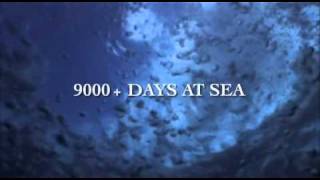
"Breathe In," a National Geographic production, celebrated the release of the first Census of Marine Life results on October 4, 2010, in London. This monumental census, involving over 9,000 days at sea and 600 institutions, established a crucial baseline for understanding marine populations.
Explore the full findings at the Census of Marine Life website. The companion book, *World Ocean Census*, can be ordered on Amazon or found at your local bookstore.

Oceanographer John Delaney is leading a team to construct an underwater network of high-definition cameras and sensors. This project aims to transform our oceans into a global interactive lab, generating an abundance of data about the world below.
Delaney, a Professor of Oceanography at the University of Washington, is also Principal Investigator and Director of the Regional Scale Nodes Program, holding the Jerome M. Paros Endowed Chair in Sensor Networks. His innovative work is featured on TED.com.

Published December 13, 2013, this video features an introduction by Lisa Emilia Svensson, Ambassador for Ocean, Seas, and Fresh Water. It covers a two-day seminar hosted by the Swedish Ministry of the Environment, the Swedish Agency for Marine and Water Management, and the Embassy of Sweden, in partnership with Duke University's Nicholas Institute, SIWI, and UNDP. The seminar emphasized the critical need for a collective voice on ocean issues.
Interviews include: Pawan Patil (World Bank, Global Partnership for Oceans), Lynn Scarlett (The Nature Conservancy), Kemi-Ann Joes (U.S. State Department), Claes Berglund (Stena AB), and Ghislaine Maxwell (TerraMar).

This video from the Census of Marine Life, uploaded on November 28, 2007, highlights the importance of monitoring ocean biodiversity globally, demonstrating how existing technologies can achieve this.
For more details, explore the Ocean Biogeographic Information System (OBIS).
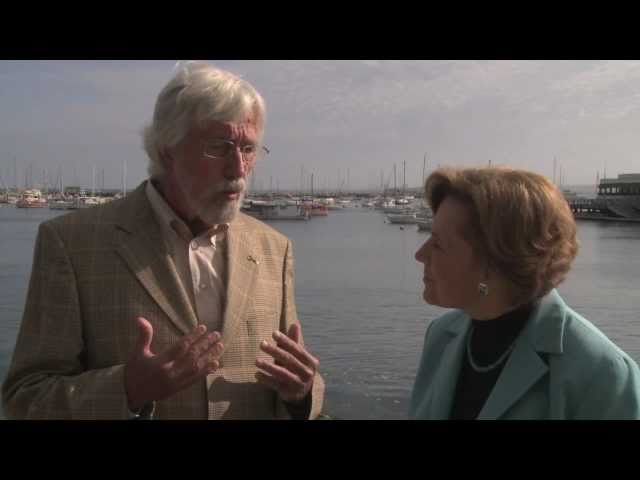
Bob Evans of the Academy of Underwater Arts & Sciences convened ocean advocates Sylvia Earle and Jean-Michel Cousteau. They discussed the state of the ocean and actions for positive change, emphasizing that "The diver's voice is an important voice."
This conversation occurred in August 2010 at the Blue Ocean Film Festival in Monterey, California. The content was uploaded on May 18, 2011.

David Helvarg's "50 Ways to Save the Ocean" program, from the Blue Frontier Campaign, empowers individuals to protect our oceans. We've developed teaching guides for grades 9-12, featured on National Geographic's Ocean Education website, to inspire the next generation of activists. His book is available on Amazon.
We are creating K-2 lesson plans, and funding is vital to complete them, expand educator outreach, and enable presentations by Helvarg and cartoonist Jim Toomey (creator of Sherman's Lagoon).
The Blue Frontier Campaign leads efforts to protect our oceans, coasts, and dependent communities. Support our mission via our crowdfunding page.

As of Earth Day 2012, Whole Foods Market no longer carries red-rated wild-caught fish in its seafood departments. This initiative supports ocean health and helps reverse overfishing trends.
We prioritize sustainable wild-caught seafood, offering the widest selection from fisheries certified by the Marine Stewardship Council (MSC). For more on our seafood sustainability, visit wholefoodsmarket.com/seafood-sustainability-basics.

Marine Biologist Dr. Stephen Palumbi discusses how global warming is transforming our oceans. He highlights rising ocean temperature, acidity, and water levels.
These environmental changes are accelerating, with their effects projected to last for centuries. Corals are among the organisms most severely impacted by these shifts.
The survival of coral ecosystems ultimately depends on the rate at which our climate continues to change.

WWF's Global Marine Programme works to increase international attention for ocean conservation and protect the high seas.
These international waters, comprising 64% of the oceans (half the planet), lie beyond national jurisdiction and are open-access common areas. For more information, visit panda.org/highseas.

From 60 feet beneath the sea, Dr. Sylvia Earle delivered a powerful wake-up call about the ocean's critical state and its necessity for human survival. This message originated from Aquarius' final mission as a research base, recorded during a live event on July 17, 2012.
The ocean is our lifeline, supplying over half our oxygen, 97% of Earth's water, and countless species. Our very existence depends on it. Watch this compelling clip featuring "Her Deepness" Sylvia Earle, a renowned ocean advocate, to understand why.
Environmental Scientist and Advocate
What EarthSayers stands for
Discover Diverse Voices on EarthSayers
Unlike algorithm-driven platforms that push you into a content bubble, we ensure you hear a variety of perspectives from scientists, activists, Indigenous leaders, business innovators, and everyday citizens working toward sustainability.
EarthSayers CINEMA
Watch, learn and lead—sustainability starts with you.
The Thinking Game | Full documentary | Tribeca Film Festival official selection
“The Thinking Game” is the inside story of DeepMind's groundbreaking AI research, culminating in the Nobel Prize-winning AlphaFold breakthrough. Filmed over five years by the award-winning team behind "AlphaGo," this documentary explores co-founder Demis Hassabis's lifelong pursuit of artificial general intelligence and the rigorous scientific journey from mastering strategy games to solving the 50-year-old protein folding problem.
Following its world premiere at the Tribeca Festival, "The Thinking Game" is now available to watch for free. For those interested in hosting a screening for a classroom, community, or workplace, visit: rocofilms.com/films/the-thinking-game/.


