



Special Collections:
Transforming Our Economy

Anna Rosling Rönnlund's project explores daily life globally, from brushing teeth in Sweden to making beds in Rwanda. She sent photographers to 264 homes in 50 countries, documenting items like stoves, beds, and toys across all income levels.
This initiative uses data visualization to reveal diverse living conditions worldwide. Rosling Rönnlund demonstrates how families live, from Latvia to Peru, fostering a better understanding of our interconnected world.
Find more TED Talks here.

Richard Wilkinson and Kate Pickett's *The Spirit Level* demonstrated how less equal societies perform worse across various social measures, including health, education, and wellbeing. This work significantly heightened public awareness of inequality's impacts.
Their subsequent book, *The Inner Level*, argues that societies built on fundamental equality, sharing, and reciprocity foster greater wellbeing. It contrasts these with societies driven by excessive individualism and aggression, offering new perspectives on how we should organize our collective lives.

The current economic system, driven by growth and profit, depletes resources and exacerbates inequality. Sustainable Human proposes a new path: a voluntary global gift economy designed to foster abundance for all by transcending scarcity economics.
This initiative invites individuals to share their unique gifts and skills, collaborating on projects to create goods and services given freely. Powered by Hylo, the Sustainable Human Gift Economy Network aims to build a bottom-up, participatory system, reducing reliance on the traditional industrial economy. Learn more and participate at sustainablehuman.com.

Environmental and economic problems like low wages and unemployment are often blamed on a hard-to-regulate U.S. economy. However, this system is intentionally rigged for the wealthy. Laws and policies overwhelmingly favor them, allowing control of vast resources and lavish living, while most Americans struggle paycheck to paycheck.
Despite ample resources, our economic system is designed for the wealthy, who manipulate it via political influence. It could easily be regulated to ensure decent jobs, healthcare, and homes for all. Yet, we largely complain without taking action.

Consumers bear responsibility for the entire product lifecycle, from resource extraction and manufacturing to eventual disposal. Despite holding admirable sustainability values, our purchasing behaviors often fail to align, impeding progress in environmental, social, and economic sustainability. Individual actions form the foundation for meaningful change.
For more insights, see Part One: https://www.youtube.com/watch?v=2TFWbpgCFjg
By Kat McDearis and Eric Pappas. Copyright 2015.
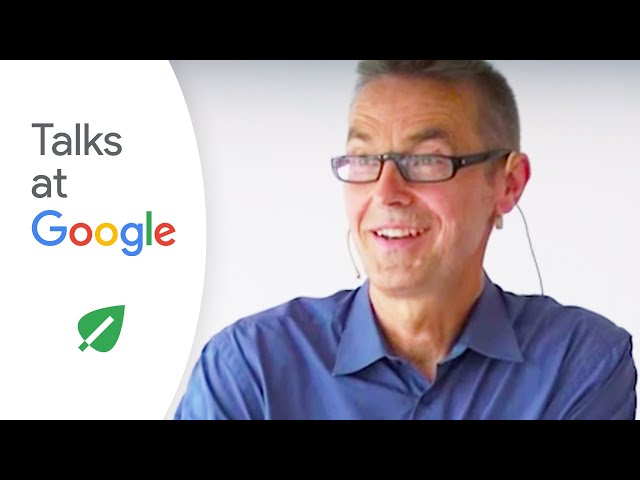
Published on August 29, 2016, by Google Talks, this features Otto Scharmer. He is a Senior Lecturer at MIT, co-founder of the Presencing Institute and the Global Wellbeing Lab, and chairs the MIT IDEAS program.
Scharmer introduced the concept of "presencing"—learning from the emerging future—in his bestselling books *Theory U* and *Presence*.
To order his book, *Theory U*, visit Amazon or your local bookstore.

Economist and writer Christian Felber presents his "Economy for the Common Good" initiative. He explores whether businesses can achieve both endless growth and be fair and sustainable, and if an economic model untainted by our current financial system is possible. Learn more about Felber's work and his book Felber Book on Common Good.
Launched in 2010, the 'Economy for the Common Good' is now supported by over 2000 businesses across 40 countries. It aims to create systemic change by awarding legal benefit points to socially responsible companies, encouraging their pursuit of the common good. Felber demonstrates how this shift can be achieved, and his book "Change Everything" is available for purchase.
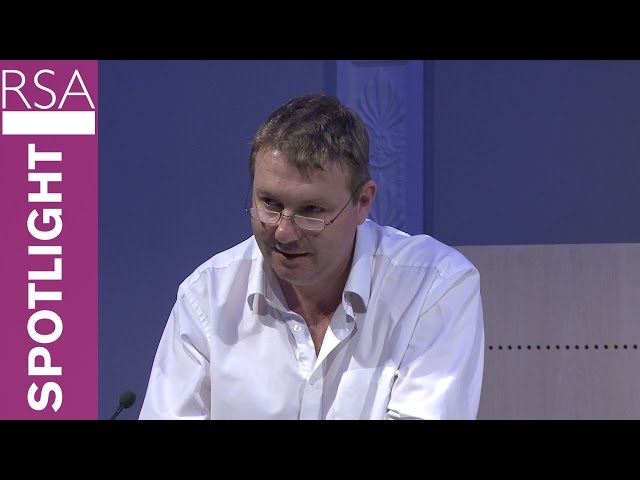
The RSA presented "The Inequality Debate" with Danny Dorling. This discussion explores whether London's economic success justifies growing inequality, and if the city can maintain economic efficiency amidst such disparities.
Watch Professor Dorling, from the University of Oxford, in the latest RSA Spotlight – an edited highlight of the event. For the full replay, click here.

Sabbath Economics is an economic practice rooted in the belief that there are sufficient resources for all. It recognizes our fundamental role as economic beings interacting with creation's resources for survival and flourishing.
A key tenet is debt forgiveness, viewed as biblical, just, and healing. This approach aims to narrow the divide between the wealthy and the poor.
Explore Sabbath Economics further at sabbatheconomics.org. Additional insights are available in these clips: Clip 2 and Clip 3.

Streamed live on May 19, 2016, Rachel Botsman visited the RSA to discuss the rapidly growing sharing economy, popularized by platforms like Airbnb and Uber. She addressed its "growing pains," exploring how to unlock its full social potential and ensure it empowers, not exploits. Botsman examined the sector's future, including new ventures, the importance of diversity, and critical issues such as monopolization, provider power, and the future of work.
A six-minute version of this discussion is available here. Follow RSA Events on Twitter, Facebook, SoundCloud for podcasts, and Instagram for behind-the-scenes.

Capitalism is often seen as a dual force: a driver of prosperity that has lifted billions from poverty, yet also a system that can foster greed. Both views contain truth.
While free enterprise promotes global prosperity, we must guard against materialism, remembering that money serves as a means to greater ends. Join Arthur Brooks—New York Times columnist, bestselling author, and president of the American Enterprise Institute—for this thought-provoking discussion.

Sam Pizzigati, an Associate Fellow at the Institute for Policy Studies, discusses his new book, "The Rich Don't Always Win: The Forgotten Triumph Over Plutocracy That Created the American Middle Class, 1900-1970."
Pizzigati also edits the Too Much blog. Explore more content from the Institute for Policy Studies on their YouTube channel.
The book is available to order from Amazon or at your local bookstore.

Award-winning FT columnist and author Gillian Tett investigates the pervasive issue of organizational silos. She explores why we create them and how to break free.
At the RSA, Tett lays bare the perils of the "silo effect." She explains how individuals and institutions can overcome these barriers to foster more effective, productive, and creative thinking and action.

Raj Patel, author of *The Value of Nothing*, critiques the free market's impact on freedom and resource management. He argues that prices often mislead us, revealing "hidden costs" that distort true value. For instance, a hamburger's real price could be $200 when factoring in environmental and health expenses.
Patel, an activist and academic, suggests Nobel laureate Elinor Ostrom's concept of collaborative governance, known as "the commons," offers a better alternative for resource management than the current free market system. Visit Raj Patel's website: rajpatel.org.

Naomi Klein, author of "This Changes Everything: Capitalism vs. The Climate," spoke at The Nation LIVE!! event held at Town Hall Seattle on October 15, 2015.
Her acclaimed book delves into the critical relationship between capitalism and climate change. You can purchase "This Changes Everything" from Amazon or your local bookstore. Learn more about Naomi Klein at her official website: naomiklein.org.
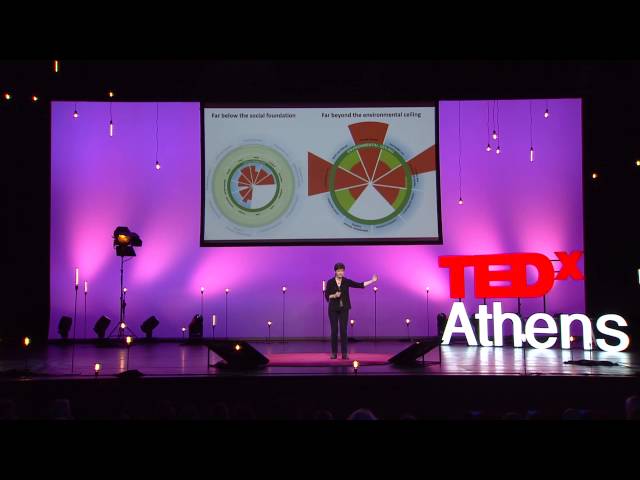
Economist Kate Raworth challenges traditional thinking with her "Doughnut Economics" concept. This framework, first published by Oxfam in 2012, outlines social and planetary boundaries for sustainable development. It has gained international recognition, influencing the UN’s Sustainable Development Goals.
Raworth is a senior visiting research associate at Oxford University and a senior associate at the Cambridge Institute for Sustainability Leadership. She has presented her ideas globally and is authoring *Doughnut Economics: seven ways to think like a 21st century economist*, due in Spring 2016.
Watch her video, "Introducing 'The Doughnut' of social and planetary boundaries for development," here. Learn more at www.kateraworth.com and follow her on Twitter @KateRaworth.

Gross Domestic Product (GDP) is the monetary value of all finished goods and services produced within a country's borders, typically calculated annually.
While GDP is often seen as the universal yardstick of progress, economic historian Dirk Philipsen argues that a finite planet cannot sustain its indefinite expansion. He proposes replacing the GDP regime with smarter goals that prioritize quality of life and ethical considerations for future generations.
Philipsen's book, *The Little Big Number*, explores this roadmap. Listen to a related podcast here.

This interview features Nobel Prize-winning economist Michael Spence discussing strategies for stronger global economic growth.
Spence is a senior fellow at the Hoover Institution and a professor emeritus at Stanford University's Graduate School of Business. He also chairs the Commission on Growth and Development, established in 2006 to focus on growth and poverty reduction in developing nations.
Published by McKinsey and Company on April 6, 2015.

Published on January 29, 2015, an article in The New York Times titled "Oil Prices and the 'Spectrum of Pain'" examines the global impact of plummeting crude oil prices.
The piece investigates why some nations are faring significantly better than others, despite crude oil falling over 50% since last summer.

This work offers a radical rethinking of our faulty assumptions about money and its proper use.
It is authored by David Korten, a prolific writer whose upcoming book, "Change the Story: Change the Future," is slated for publication in 2015.
Environmental Scientist and Advocate
What EarthSayers stands for
Discover Diverse Voices on EarthSayers
Unlike algorithm-driven platforms that push you into a content bubble, we ensure you hear a variety of perspectives from scientists, activists, Indigenous leaders, business innovators, and everyday citizens working toward sustainability.
EarthSayers CINEMA
Watch, learn and lead—sustainability starts with you.
How to Live on Earth | Feature Documentary | Presented by Benedict Cumberbatch
What if the solutions to building a better future already exist? How to Live on Earth is an ambitious documentary that explores how humanity can create a thriving future by collaborating with nature. Presented by Benedict Cumberbatch, the film reveals the potential of teaming up with nature to address our greatest challenges.
Heartwarming and energizing, it offers a hopeful vision for a future where both nature and humanity can thrive. How to Live on Earth is produced by Open Planet Studios in association with Villars Institute Foundation and Silvania. Join the conversation by downloading film assets and sharing your reaction at howtoliveonearth.net/social-toolkit. Explore educational resources from the Villars Institute at YouTube.


