



Special Collections:
Our Youth Speak Up
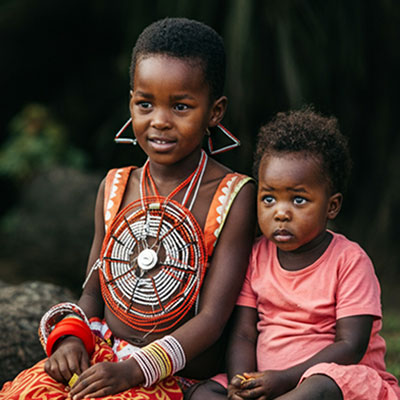

Annika Weber, 18, co-founded the Northwest School Carbon Neutrality Task Force in early 2021. Observing widespread burnout among youth activists, she sought to combine youth passion with adult experience for sustained, tangible results. The task force, including students, parents, and faculty, researched how her high school could achieve carbon neutrality by 2030.
They surveyed the community, collected baseline data, and presented a report to school leadership. The school is now finalizing the adoption of these recommendations. If implemented, it would be the first 6-12 school in the U.S. to target carbon neutrality by 2030 without carbon offsets.

Since high school, 17-year-old Hamid Torabzadeh has volunteered with the American Red Cross, empowering youth to prevent and alleviate human suffering amidst increasing climate and public health disasters.
He leads the Los Angeles READYteens Program, educating high school students on disaster preparedness, response, and recovery. READYteens trains youth in CPR/First Aid and emergency communications, prioritizing vulnerable communities most susceptible to climate-related emergencies.
Hamid's efforts have reached over 10,000 youth volunteers nationally, trained 350 LA students, and educated 1,000+ LA households on fire and earthquake safety.

In 2018, Ilana Cohen co-founded the New York City chapter of Zero Hour and organized one of the nation’s first Youth Climate Marches, spurred by political inaction. As a Harvard student, she relaunched the Fossil Fuel Divest Harvard campaign, securing a historic victory when the university pledged to divest its $53 billion endowment from fossil fuels.
Cohen, 21, later co-founded Fossil Free Research, an international grassroots campaign. It unites students and experts against Big Oil’s influence on climate research, aiming to protect academic integrity and accelerate a just energy transition. The campaign has published an open letter signed by over 740 academics, staged international actions, and formed campus coalitions.

In 8th grade, Lauren U.C. Ejiaga's science fair project on ozone depletion and Louisiana's marsh grasses won a top prize at Broadcom MASTERS. This experience highlighted the importance of environmental awareness alongside research, inspiring her to educate peers.
Now 17, Lauren leads multiple native plant restoration projects as a cohort leader for the Coalition to Restore Coastal Louisiana. She also founded the "Conservation and Restoration Conjunction," a series of workshops promoting STEM education and coastal protection among youth. She recruits national science fair winners to speak about STEM careers.
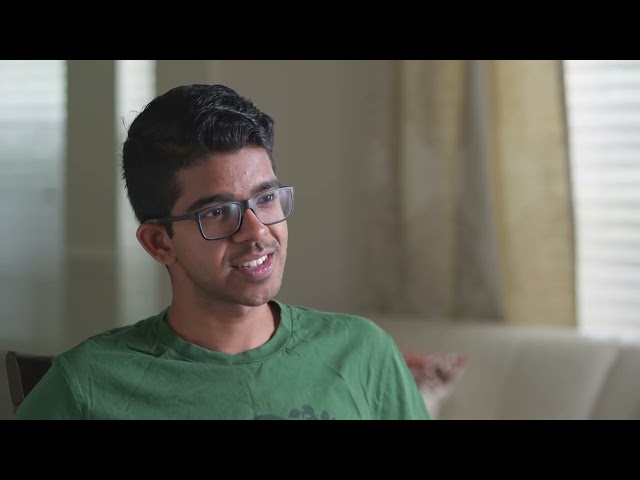
High school senior Raghav Kalyanaraman has dedicated two years to restoring North Texas's Blackland Prairie Ecosystem. This vital habitat, with less than 0.001% remaining, supports over 500 native species, prevents soil erosion, and replenishes aquifers.
Leading hundreds of youth volunteers, Raghav has restored five acres at the Heard Museum. His work includes clearing invasive species, planting native flora, installing 118 waterbars to mitigate trail erosion, and constructing enclosures to aid dwindling box turtle populations. He also founded Eagles For Environment to further community involvement. Learn more at broweryouthawards.org.

A showreel was developed for wildlife conservationist Mya-Rose Craig.
This project was undertaken by filmmaker Josh Dury.

The Bradford Literature Festival Digital Education Programme 2021 featured environmental activist and campaigner Mya-rose Craig. Learn more at [bradfordlitfest.co.uk](https://www.bradfordlitfest.co.uk).
Craig emphasized the importance of recognizing diverse environmental voices beyond well-known figures like Greta Thunberg. She stated, "We keep on hearing about the same names... there are so many people all around the world doing amazing things." Discover more activists on EarthSayers.TV.

On June 27, 2022, a discussion explored Blue Shield's latest Youth Climate Survey, focusing on how climate change impacts the mental health of young people.
The event featured insights from David W. Bond (Director of Behavioral Health, Blue Shield of California—Promise Health Plan), youth environmental activist Kat Lee (APEN), and student representative Maya Gomez (Mind Out Loud, Whitney High School). Additional speakers included Antoinette Mayer (Senior Director, Corporate Citizenship, Blue Shield), Joel Castro (President, Cesar Chavez Service Club), and co-host Michelle Meow (Producer and Host, "The Michelle Meow Show").
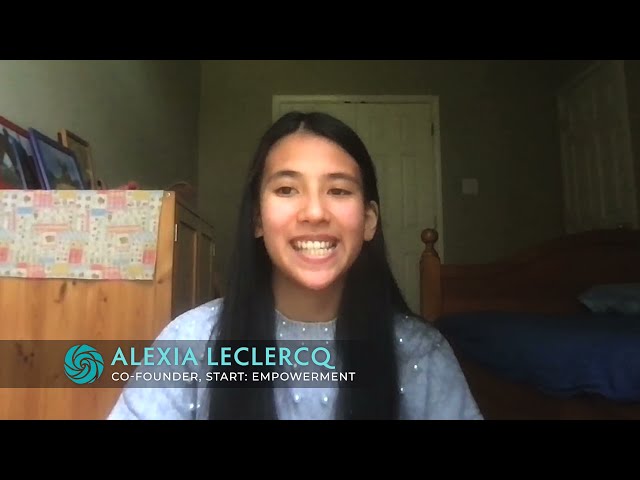
For the Climate Justice Movement to achieve true "justice," it must be radically inclusive, intersecting with social, racial, gender, and disability justice movements. Alexia Leclercq, a Brower Youth Award winner and environmental justice organizer, passionately advocates for these rarely discussed aspects of intersectionality.
Leclercq delivered this talk at the 2021 Bioneers Conference. Learn more at www.bioneers.org.

Young people globally are increasingly demanding and taking action on climate change. Our "Creating Citizens" initiative provides a forum for youth to engage with peers and leaders on pressing issues. Join us for a special panel featuring young climate activists discussing their work and the power of youth to address the climate crisis, racial, and social injustice.
Attendees will receive a free copy of Vanessa Nakate's book, A Bigger Picture: My Fight to Bring a New African Voice to the Climate Crisis. Speakers include Samir Chowdhury, Vanessa Nakate, Zaria Romero, and Darren Zook. Special thanks to the Ken & Jaclyn Broad Family Foundation.
The Commonwealth Club of California, the nation's oldest and largest public affairs forum, hosts over 500 annual events. Learn more and become a member: https://www.commonwealthclub.org/membership.

Following his COP26 speech on November 8, 2021, President Barack Obama joined youth climate activists, including Columbia students, at a private roundtable. Co-sponsored by the Columbia Climate School and the Obama Foundation, the discussion explored the future of climate action and what inspires hope.
The session featured Andrew Fagerheim (SEAS'24), Eduarda Zoghbi (SIPA'22), and Columbia Obama Scholar Christian Vanizette.
Watch the entire session on C-SPAN: https://bit.ly/3ofNEoC

The 22nd annual Brower Youth Awards, a two-part virtual event, celebrated six young environmental leaders. The Q&A with winners was held virtually on October 19, 2021.
The 2021 theme, "Our Power," highlighted the unique strength of this generation to mobilize environmental activism and drive cultural paradigm shifts. These leaders embody the ability to create significant effect during environmental peril.
A flagship event of the New Leaders Initiative, the Brower Youth Awards has recognized outstanding youth environmental leaders since 2000. The national award is presented by Earth Island Institute. Learn more at broweryouthawards.org.

Alexia Leclercq delivered a speech at the 2021 Brower Youth Awards, held virtually on October 14.
For more information about the awards, visit broweryouthawards.org.
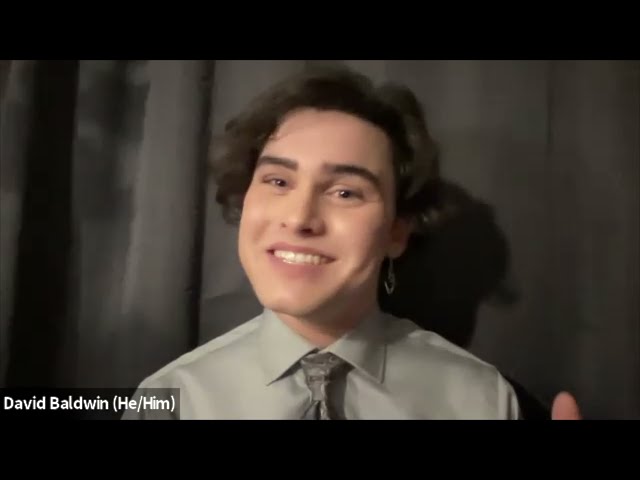
David Baldwin delivered a speech at the 2021 Brower Youth Awards. This virtual event took place on October 14.
For more details, visit the Brower Youth Awards website: www.broweryouthawards.org.

Artemisio Romero y Carver delivered a speech at the 2021 Brower Youth Awards. This virtual event was held on October 14.
For more information about the awards, visit the official website: Brower Youth Awards.

Alexandria Gordon delivered a speech at the 2021 Brower Youth Awards. This virtual event took place on October 14.
For more information about the awards, please visit broweryouthawards.org.
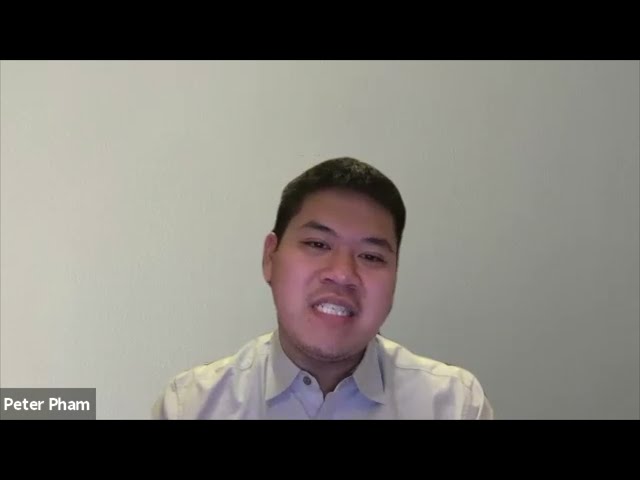
Peter Pham delivered a speech at the 2021 Brower Youth Awards, a virtual event held on October 14.
For more information about the awards, please visit the official website: broweryouthawards.org.

Sonja Michaluk delivered a speech at the 2021 Brower Youth Awards. This virtual event took place on October 14.
For more information, visit the official Brower Youth Awards website: broweryouthawards.org.

Eighteen-year-old David Baldwin, inspired by the Everglades, developed a passion for Florida's ecology. At 14, he joined the Everglades Restoration Ambassadors, a nonprofit dedicated to removing nonnative plants. He also educates elementary students using his own modules.
Baldwin's educational programs stem from his research, which began in 2017. Interning at Florida Atlantic University, he studied Caesar's weed, investigating its germination and spread. His findings led him to theorize land-management practices, including hands-on removal and prescribed burns, to control this invasive species.
Environmental Scientist and Advocate
What EarthSayers stands for
Discover Diverse Voices on EarthSayers
Unlike algorithm-driven platforms that push you into a content bubble, we ensure you hear a variety of perspectives from scientists, activists, Indigenous leaders, business innovators, and everyday citizens working toward sustainability.
EarthSayers CINEMA
Watch, learn and lead—sustainability starts with you.
How to Live on Earth | Feature Documentary | Presented by Benedict Cumberbatch
What if the solutions to building a better future already exist? How to Live on Earth is an ambitious documentary that explores how humanity can create a thriving future by collaborating with nature. Presented by Benedict Cumberbatch, the film reveals the potential of teaming up with nature to address our greatest challenges.
Heartwarming and energizing, it offers a hopeful vision for a future where both nature and humanity can thrive. How to Live on Earth is produced by Open Planet Studios in association with Villars Institute Foundation and Silvania. Join the conversation by downloading film assets and sharing your reaction at howtoliveonearth.net/social-toolkit. Explore educational resources from the Villars Institute at YouTube.


